
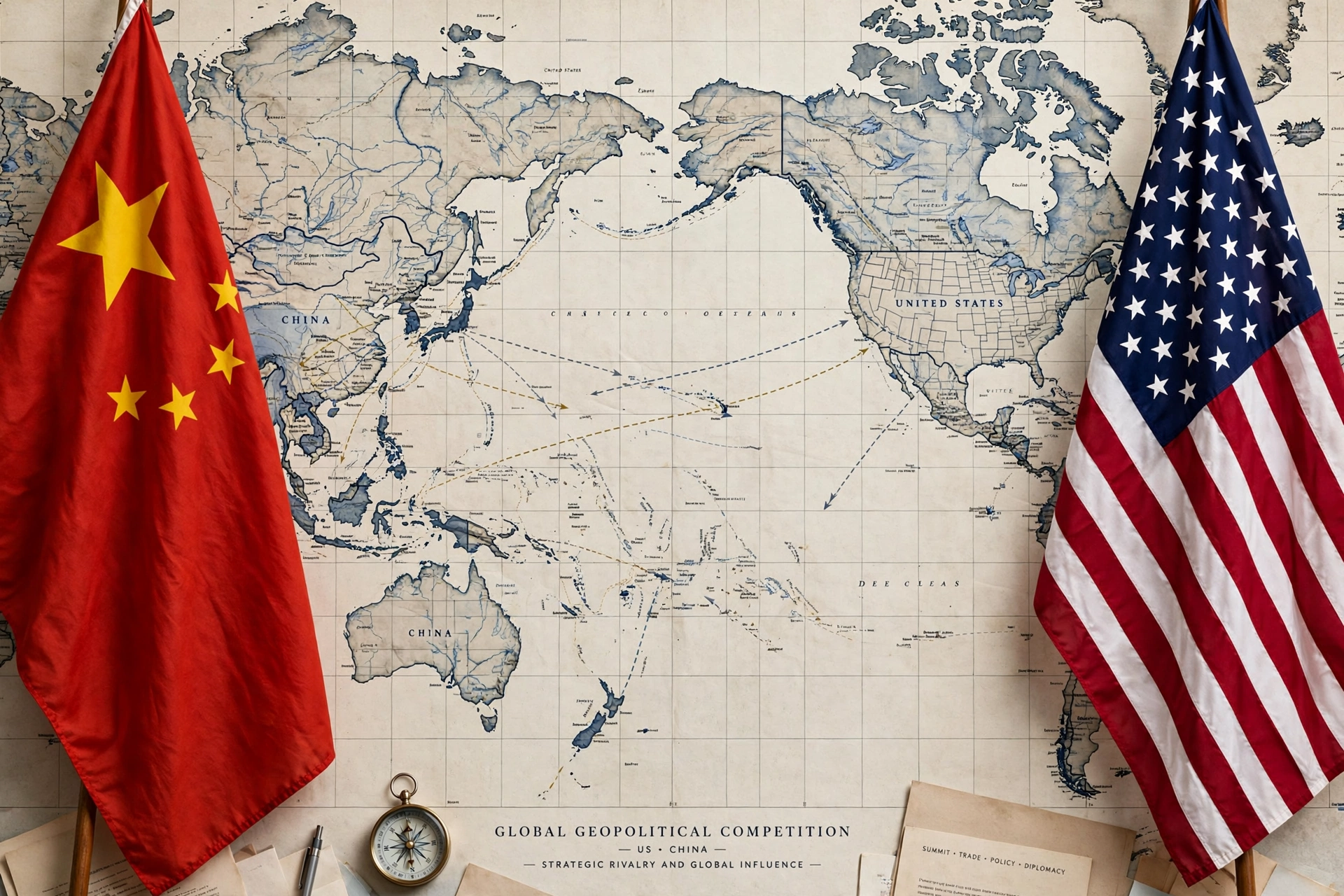
For decades, the United States has played a central role in shaping world politics. Its economic strength, military alliances, and diplomatic influence have helped define the international system. Today, however, China's rapid rise is changing the global balance of power.
China has become a major manufacturing and technological power. Its products reach markets around the world, its investments connect economies, and its diplomats play an increasingly important role in international affairs.
This raises an important question: is the world moving toward a new global order in which several major powers share influence? The answer is complex. China is becoming more influential, but the United States remains a major economic, military, and diplomatic power. The world is increasingly shaped by competition, cooperation, and strategic rivalry between countries.
China's Economic Power
China's economy is one of the main sources of its international influence. The country produces electronics, machinery, electric vehicles, batteries, and solar panels for global markets. Many countries depend on Chinese products and manufacturing supply chains, giving Beijing an important position in international trade and economic negotiations.
However, China faces challenges, including weak domestic demand, property-sector difficulties, and growing trade tensions. Its economic strength does not automatically give it control over other countries. Governments can trade with China while maintaining independent foreign policies and relationships with other major powers.
The Belt and Road Initiative
China launched the Belt and Road Initiative in 2013 to support infrastructure and international connectivity. Projects have included roads, railways, ports, and energy infrastructure across participating countries.
These investments can improve transportation, support trade, and create economic opportunities. However, their success depends on financial sustainability, transparent agreements, and effective project management. Poorly planned projects can create debt pressures, while well-designed projects can improve long-term economic development. The initiative also strengthens China's relationships with participating countries, giving it a broader international presence.
China and the United States: Strategic Competition
The relationship between China and the United States is one of the most important in modern international politics. Both countries compete over trade, advanced technology, artificial intelligence, semiconductors, and international influence. Trade restrictions and export controls have increased tensions and encouraged companies to reconsider their supply chains. Security disagreements involving Taiwan and the South China Sea create additional risks.
Despite these differences, both countries have strong reasons to avoid direct military conflict. A major confrontation could cause severe human suffering, disrupt international trade, and damage the global economy. The challenge for both governments is to manage their rivalry without allowing it to escalate into war.
China's Growing Diplomatic Influence
China has expanded its diplomatic relationships across Asia, Africa, the Middle East, and Latin America. It also participates in international organisations and groupings such as the United Nations, BRICS, and the Shanghai Cooperation Organisation.
Beijing argues that developing countries should have a stronger voice in international decision-making. This message appeals to governments seeking alternatives to traditional Western-led institutions. However, China's diplomatic influence varies from country to country. Some governments welcome Chinese investment and cooperation, while others worry about economic dependence and regional security. Ultimately, China's influence depends on whether other countries believe that cooperation with Beijing serves their national interests.
Technology and Global Competition
Technology has become a major source of geopolitical power. Countries that lead in artificial intelligence, semiconductors, telecommunications, and advanced manufacturing can gain economic advantages and strategic influence. China has developed strong industries in electric vehicles, batteries, solar panels, and several other technological sectors.
At the same time, restrictions on advanced technology and competing export policies have created tensions between China and other major economies. Future technological leadership will depend on research, education, innovation, and the ability to turn scientific discoveries into useful products.
China's Military Modernisation
China has invested heavily in modernising its armed forces, including its navy, missile systems, aircraft, and surveillance capabilities. These developments have attracted international attention, particularly in the Indo-Pacific region. Taiwan and the South China Sea remain sensitive areas where disagreements could create serious security risks.
Military modernisation can strengthen a country's ability to deter threats, but it can also increase concerns among neighbouring states. Regional stability therefore depends on diplomacy, communication, and responsible management of disputes, alongside military preparedness.
What China's Rise Means for Pakistan
China is one of Pakistan's most important strategic and economic partners. Their cooperation spans trade, infrastructure, defence, and diplomatic relations, and the China-Pakistan Economic Corridor (CPEC) remains the centerpiece of this relationship, with infrastructure and energy projects that offer real opportunities for economic development.
But a closer partnership with a rising global power is not automatically a benefit — it has to be managed well. As global competition between China and the US intensifies, Pakistan's position becomes more consequential, not less, and that makes four priorities especially important:
- Increase exports: Pakistan should use improved infrastructure to help domestic businesses compete internationally, rather than letting new roads and ports serve transit trade alone.
- Improve transparency: Major projects should have clear financial terms and effective oversight, so that debt obligations remain sustainable and publicly understood.
- Develop skills: Education, technical training, and digital skills can help Pakistani workers benefit directly from new economic opportunities, instead of these benefits accruing mainly to foreign contractors.
- Diversify partnerships: Pakistan should maintain productive relationships with China, the United States, Europe, Gulf countries, and other partners, so that no single relationship becomes a point of excessive dependence or geopolitical risk.
China's rise creates genuine opportunities for Pakistan, but long-term success will depend far more on domestic economic reforms and effective policymaking than on the scale of foreign investment alone.
The Limits of China's Global Influence
China's growing power does not mean it can determine the direction of world politics alone. Economic challenges at home could affect its future growth. International trade tensions may limit access to some markets, while regional disputes can complicate diplomatic relationships.
Other countries also have their own national interests and security concerns. They may welcome Chinese investment without agreeing with Beijing on every international issue. The United States retains important advantages in global finance, military alliances, and technological research. Other powers, including India and the European Union, also influence international affairs. The emerging global order is therefore more complicated than a simple contest between China and the United States.
Is a New Global Order Emerging?
China's rise is reshaping world politics through manufacturing, technology, infrastructure investment, diplomacy, and military modernisation. However, the United States remains highly influential, and several other powers continue to shape international decisions. The future is likely to involve continued competition alongside areas of economic and diplomatic cooperation.
For Pakistan and other developing countries, this changing environment offers opportunities to attract investment, expand trade, and strengthen international relationships. Realising these opportunities requires sound economic policies, credible institutions, skilled workers, and balanced diplomacy.
China is helping reshape the global order, but the final outcome remains uncertain. Whether the coming decades bring greater cooperation or deeper rivalry will depend on the decisions made by governments around the world.
Frequently Asked Questions
Why is China becoming more influential in world politics?
China's influence is growing through international trade, manufacturing, technology, infrastructure investment, diplomacy, and military modernisation.
Is China more powerful than the United States?
Both countries have significant strengths. China has enormous manufacturing capacity, while the United States retains major advantages in international finance, alliances, and military reach.
What is the Belt and Road Initiative?
It is a Chinese initiative supporting infrastructure and connectivity projects in participating countries, including transport, energy, and logistics.
How does China's rise affect Pakistan?
It creates opportunities for investment, infrastructure development, and trade, mainly through CPEC. The long-term benefits depend on project quality, export growth, and Pakistan's own economic policies.
Will China replace the United States as the world's leading power?
That remains uncertain. The outcome will depend on economic performance, technological innovation, diplomacy, and the ability of both countries to manage strategic competition.