
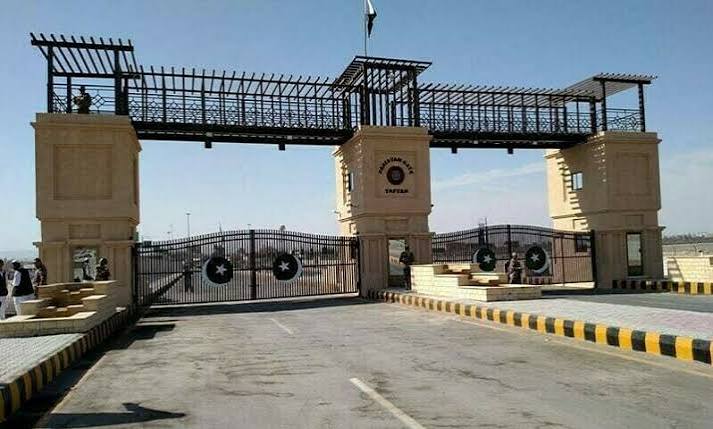
A nation’s economic prosperity and stability rely heavily on the strength of its ties with neighboring countries and the openness of its trade routes. Geographically, Pakistan sits at a vital crossroads connecting South Asia, Central Asia, and the Middle East. Yet today, following longstanding border disruptions with India and Afghanistan, the closure of the Iranian border has sparked a fresh economic and diplomatic crisis.
This raises a critical question: When gateways from east to west are shut down, how can the wheels of the national economy keep turning?
From East to West: A Story of Closed Doors
Pakistan’s border policies and diplomatic relations with its immediate neighbors have remained strained for years:
The Pak-India Border (Wagah): On the eastern front, political and diplomatic deadlocks with India have already brought bilateral trade to a virtual standstill. Goods that could be imported cheaply and quickly from right across the border are now routed through third-party countries at inflated costs.
The Pak-Afghan Border (Torkham, Chaman, Ghulam Khan): On the western frontier, persistent security concerns, cross-border militancy, and the strict enforcement of the "One Document Regime" (mandating passports and visas) result in frequent closures at key crossings like Torkham and Chaman. Not only has this devastated bilateral commerce, but it has also stalled Pakistan’s broader ambition of accessing Central Asian Republics (CARs).
The Pak-Iran Border (Taftan, Gabd, Mand): Now, halting movement across the Iranian border has added fuel to the fire. Whenever these routes are suspended due to security incidents, anti-smuggling crackdowns, or regulatory shifts, the economic shock-waves are felt across Balochistan and the rest of the country.
The Toll on the Common Man and Border Livelihoods
Whenever international borders shut down, the immediate casualty is always the ordinary citizen and the small-scale trader. The border districts of Khyber Pakhtunkhwa and Balochistan lack heavy industries or manufacturing hubs; for millions of residents in these regions, cross-border trade is the sole lifeline.
A Wave of Inflation: As soon as the supply of food items, fresh fruits, vegetables, dry fruits, and affordable Iranian fuel and LPG is choked off, prices in local markets skyrocket.
Unemployment for Transporters and Laborers: Hundreds of cargo trucks end up stranded on both sides of the border, causing millions of rupees worth of perishable goods to rot. Thousands of daily-wage earners, loaders, drivers, and clearing agents are pushed to the brink of starvation.
Humanitarian and Social Distress: Communities living along these frontiers share centuries-old familial, tribal, and cultural ties. Border closures leave medical patients unable to reach hospitals, strand religious pilgrims mid-journey, and cut divided families off from one another.
Security vs. Economy: Where is the Balance?
Undeniably, national security and sovereign territorial integrity are paramount for any state. Curbing terrorism and eliminating illegal smuggling are pressing priorities. However, globally, states do not resolve security challenges by repeatedly or permanently locking down their borders; instead, they deploy modern Smart Border Management systems.
Shutting down a border is not a permanent solution—it is often an admission that diplomatic and administrative channels have failed. When legal trade corridors are blocked, smuggling networks and black markets thrive. In the end, the state loses vital tax revenue without achieving lasting security.
The Way Forward
Given the severe economic headwinds Pakistan currently faces, regional isolation is simply un-affordable. Navigating out of this crisis requires immediate, pragmatic steps:
Proactive and Results-Oriented Diplomacy: Rather than relying on reactionary measures or protest notes, Islamabad must engage in high-level, constructive dialogues with Tehran and Kabul to resolve security concerns through mutual cooperation.
Decoupling Trade from Politics: The practice of holding commercial convoys and civilian movement hostage during moments of political or security tension must be abandoned.
Operationalizing Border Markets: Joint border markets announced along the Iranian and Afghan frontiers need to move from paper to reality, providing legal, regulated livelihoods to local populations.
Closed borders from east to west are eroding the strategic value of Pakistan’s geography. Unless economic survival and public welfare are placed at the heart of foreign and domestic policies, these locked gates will end up sealing off the country's own economic future. The true strength of a modern state lies not in building higher walls, but in constructing resilient commercial and diplomatic bridges.