
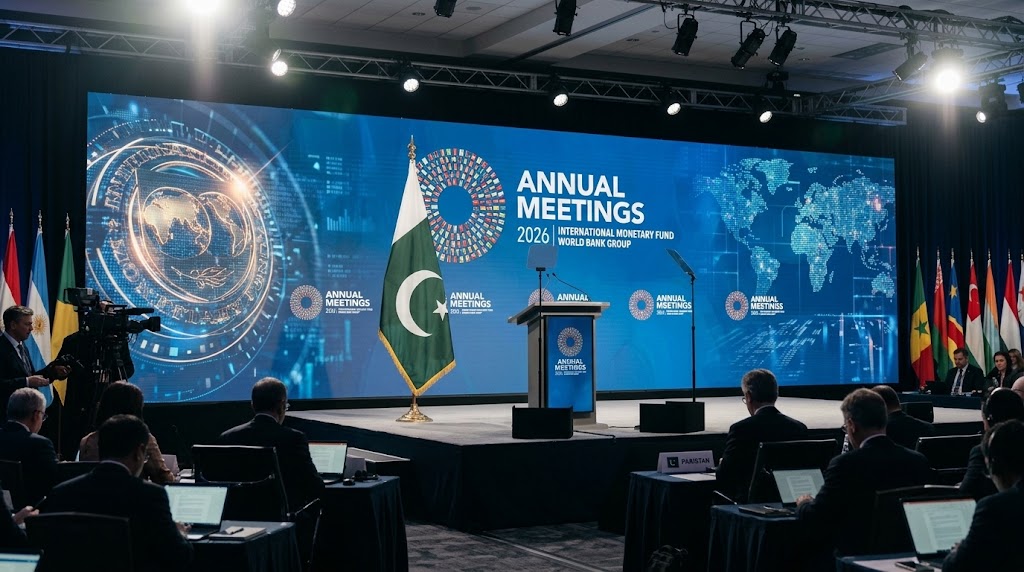
For decades, whenever Pakistan and the International Monetary Fund (IMF) appeared in the same headline, the storyline was predictable: marathon negotiations, strict fiscal targets, and bailout tranches. This week at the 2026 IMF–World Bank Annual Meetings in Bangkok, the script flipped.
For the first time since 1953, Pakistan has been named the incoming chair of the Boards of Governors of both the IMF and the World Bank Group for 2027.
With more than 15,000 delegates from 191 countries gathered in Bangkok between October 12 and 18, Pakistan’s Minister for Economic Affairs, Ahad Khan Cheema—who also serves as Pakistan's Governor to the World Bank—was formally designated to lead the prestigious global forum next year.
A 74-Year Wait: The Historical Context
To understand how rare this moment is, you have to look back to the early years of the Bretton Woods institutions. Pakistan last held the chairmanship in 1953, when then-Finance Minister Mohamad Ali presided over the eighth annual meetings in Washington, D.C.
Since the chairmanship rotates among member countries rather than staying locked in the hands of the wealthiest shareholders, only a handful of South Asian nations have ever held the gavel:
India chaired the meetings in Paris in 1950.
Pakistan took the helm in Washington in 1953.
Ceylon (now Sri Lanka) presided in 1968.
Nepal held the chair in 1999.
Following the Bangkok announcement, Cheema met with outgoing chair Carlos Carvallo Spalding, Governor of Paraguay's central bank, alongside World Bank Vice President and Corporate Secretary Aradhana Kumar-Capoor to map out the transition ahead of the October 4–9, 2027 meetings in Washington.
Prestige vs. Power: What Does the Chair Actually Do?
Whenever a borrowing nation steps into a leadership role at the IMF or World Bank, a natural question arises: Does this give Pakistan leverage over its own loans?
The short answer is no. Under the bylaws of both institutions, the chairmanship is a diplomatic and procedural role, not an operational one.
What the Chair Does: Presides over the plenary sessions of the Annual Meetings, sets a collaborative tone for global economic discussions, and facilitates high-level dialogue among 191 member nations.
What the Chair Cannot Do: Override Executive Board decisions, alter loan conditions, or influence lending operations and financing approvals.
The Irony at Home: Chairing While Borrowing
What makes this appointment particularly striking is the economic backdrop. Pakistan isn't stepping up to the podium as a carefree observer; it remains one of the IMF's most heavily engaged clients.
Right now, Islamabad is navigating two major financial lifelines:
$7 Billion Extended Fund Facility (EFF): Focused on stabilizing Pakistan's balance-of-payments crisis and enforcing deep structural reforms.
$1.4 Billion Resilience and Sustainability Facility (RSF): Designed to help the country build long-term defenses against climate shocks.
Having recently reached a staff-level agreement on the latest programme reviews, Pakistan is currently awaiting Executive Board approval to unlock roughly $1.2 billion in fresh financing.
Why Symbolism Still Matters in Global Finance
If the chairmanship doesn't come with a magic wand to waive debt or soften loan conditions, why is Islamabad celebrating it as a historic milestone?
Because in international diplomacy, who holds the microphone matters.
When Ahad Khan Cheema bangs the gavel in Washington in October 2027, a minister from a climate-vulnerable, debt-stressed developing nation will be standing at the front of the room where the world's most powerful finance ministers and central bankers gather. Rather than only answering questions from across the negotiating table, Pakistan gets a global stage to shape conversations around sovereign debt relief, fairer development funding, and urgent climate finance for the Global South. Muhammad Akhlas Khan From Bannu.