
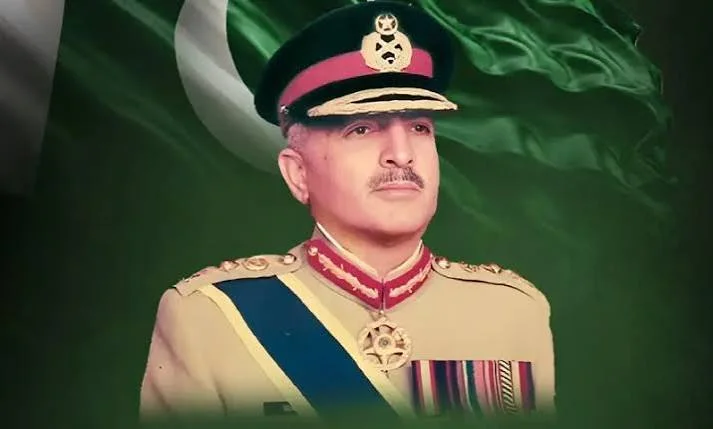
General (retd) Abdul Waheed Kakar, a former Chief of Army Staff of Pakistan, died in Rawalpindi on Monday, 26 October 2026, at the age of 89. His death was confirmed by the military's media wing, the Inter-Services Public Relations (ISPR). Field Marshal Syed Asim Munir, the Army Chief and Chief of Defence Forces, and all ranks of the Pakistan Army paid tribute to his services, and President Asif Ali Zardari also expressed deep sorrow. May he rest in peace.
General Kakar is remembered in Pakistan's history for one reason above all. During the severe political crisis of 1993, when many expected the army to step in, he did not take power. Instead, he found a way for both the president and the prime minister to step down and for the country to go to fresh elections. That approach became known as the "Kakar Formula".
General Kakar at a Glance
| Detail | Information |
|---|---|
| Full name | Abdul Waheed Kakar |
| Born | 23 March 1937, on the outskirts of Peshawar (his Kakar family originally came from Zhob, Balochistan) |
| Died | 26 October 2026, Rawalpindi |
| Commissioned | 18 October 1959, Frontier Force Regiment (20th PMA Long Course) |
| Army Chief | 12 January 1993 to 12 January 1996 |
| Honours | Nishan-e-Imtiaz (Military), Hilal-e-Jurat |
| Succeeded by | General Jahangir Karamat |
Early Life and Education
Abdul Waheed Kakar was born on 23 March 1937 on the outskirts of Peshawar into a Pashtun family of the Kakar tribe, whose roots lie in Zhob, Balochistan. He received his early education in Peshawar and graduated from Edwardes College, Peshawar. He was the nephew of Sardar Abdur Rab Nishtar, a prominent leader of the Pakistan Movement.
The Start of His Military Career
In 1956 he began training at the Pakistan Military Academy, Kakul, and on 18 October 1959 he was commissioned as a second lieutenant in the Frontier Force Regiment. In the 1965 war he served on the Chawinda front near Sialkot, and in 1971 he was a brigade major with an independent infantry brigade in the Sulemanki sector.
He later studied at the Command and Staff College in Canada and at the National Defence College, Rawalpindi. He served as General Officer Commanding of the 16th Division (Pano Aqil), as Adjutant General at GHQ from 1987 to 1989, and in 1989 was posted as Corps Commander Quetta with the rank of lieutenant general.
How He Became Army Chief
In January 1993, after the sudden death of Army Chief General Asif Nawaz Janjua, President Ghulam Ishaq Khan appointed Lieutenant General Abdul Waheed Kakar as the new chief, without consulting Prime Minister Nawaz Sharif and over the heads of six senior generals. General Kakar was close to retirement at the time and, by most accounts, did not expect the appointment himself. The decision was controversial when it was made, but what followed gave General Kakar a distinct place in history.
The "Kakar Formula": The 1993 Constitutional Crisis
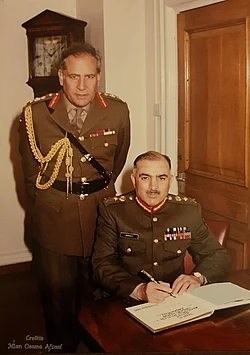
In April 1993, the president dissolved the National Assembly and dismissed Nawaz Sharif's government. The standoff between the president and the prime minister then pushed the country towards a deep crisis. It is said that several politicians advised General Kakar to impose martial law, but he did not take that path.
In July 1993, he persuaded both leaders, President Ghulam Ishaq Khan and Prime Minister Nawaz Sharif, to resign. Senate Chairman Wasim Sajjad became acting president, a caretaker government was set up, and in the October 1993 elections Benazir Bhutto's Pakistan Peoples Party won. Power changed hands without a single brigade being moved, and nobody challenged the arrangement in court.
This approach later came to be called the "Kakar Formula" or the "Kakar Model", and it is still cited as a positive example of civil-military relations.
The Foiled 1995 Coup Plot
In September 1995, a group of army officers led by Major General Zaheerul Islam Abbasi planned a coup against General Kakar and Prime Minister Benazir Bhutto. The ISI and Military Intelligence acted in time and foiled the plot, and the officers involved were arrested and court-martialled.
Refusing an Extension and Leaving Quietly
When his three-year term ended in January 1996, General Kakar declined to take an extension. On 12 January 1996, General Jahangir Karamat took over from him. After retirement he lived a quiet life in Rawalpindi and was rarely seen in public.
Character and Legacy
Colleagues and observers remember General Kakar for his simplicity, integrity and adherence to principle. When he was appointed, a prominent politician from Balochistan remarked that he was not a general of the colonial Sandhurst mould, but an enlightened man who had risen from the mountains of Loralai. He was awarded the Nishan-e-Imtiaz (Military) and the Hilal-e-Jurat.
General Abdul Waheed Kakar will be remembered as a chief who, at the hardest moment, chose the constitutional path over power. The "Kakar Model" remains a reference point in the debate on who should run a country: civilian leaders govern, and the army stays within its professional role.
Frequently Asked Questions
When did General Abdul Waheed Kakar die?
He died on 26 October 2026 in Rawalpindi at the age of 89. His death was confirmed by ISPR.
What was the "Kakar Formula"?
It was the solution under which, in July 1993, President Ghulam Ishaq Khan and Prime Minister Nawaz Sharif both resigned, a caretaker setup was formed and fresh elections were held, while General Kakar did not seize power.
How long was General Kakar the Army Chief?
From 12 January 1993 to 12 January 1996. He declined an extension, and General Jahangir Karamat succeeded him.
What honours did General Kakar receive?
According to ISPR, he was awarded the Nishan-e-Imtiaz (Military) and the Hilal-e-Jurat.