
Ask ten people in Lahore how old their city really is, and you will get ten different answers. Some will tell you it is named after the son of a Hindu god. Others will point you to a Greek geographer who mapped the region almost two thousand years ago. The honest answer is that nobody knows the exact age of Lahore, and that mystery is part of what makes its story worth telling.
How old is Lahore, really?
The oldest story about Lahore is not historical at all, it is a legend. According to local tradition, the city was founded by Lava, son of the Hindu god Rama, and a small, empty temple inside Lahore Fort is still dedicated to him today. Whether or not you take that literally, it shows how long people in this region have believed Lahore to be ancient.
The first solid written reference comes much later. The Greek-Egyptian scholar Ptolemy mentioned a city in this general area in his famous work on geography, somewhere near the Ravi, Chenab and Jhelum rivers. But the first document that actually describes Lahore in real detail is an anonymous Persian geography text from 982 AD. It describes a modest walled town with busy markets and orchards, essentially a trading post rather than the grand city it would later become.
Lahore before Islam arrived
Long before the Ghaznavids or Mughals, this region passed through a long list of ruling powers, including Indo-Greek kings, the Kushans, the Guptas, and local Hindu dynasties. Almost nothing physical survives from this era. Historians generally put this down to two reasons: the lack of good building stone nearby, and the fact that early rulers in northern India simply did not build in permanent stone the way some southern dynasties did. The stories of this period survive, but the buildings mostly do not.
The Ghaznavid conquest that changed everything
Everything shifts around 975 AD, when Sabuktigin, the ruler of Ghazni in modern Afghanistan, pushed into the region and clashed with the local Hindu king, Raja Jayapala. The fighting dragged on for years before passing to Sabuktigin's far more famous son, Mahmud of Ghazni, who captured Lahore outright in 1022 and had it plundered.
What surprises most people is who rebuilt it afterward. Mahmud placed his trusted governor, Malik Ayaz, in charge of Lahore, and under him the city did not just recover, it flourished into a genuine center of poetry and learning. By 1163, Lahore had become the full capital of the Ghaznavid Empire. Ayaz's tomb still stands today in the Rang Mahal area of the city.
Delhi Sultanate rule and the Mongol destruction
After the Ghaznavids fell, Lahore passed through a rotating cast of Muslim dynasties under the Delhi Sultanate, including the Mamluks, Khaljis, Tughlaqs and eventually the Lodis. In 1206, Qutb-ud-din Aibak was crowned here, becoming the first Muslim sultan of South Asia and giving Lahore an important place in the subcontinent's history.
This era was brutal. Mongol armies attacked Lahore repeatedly through the thirteenth century, and in 1241 a Mongol force reportedly leveled much of the city and massacred its population. They returned again in 1297, 1298 and 1305. This is actually why Lahore has almost no surviving buildings older than the Mughal period, there was very little left standing after these raids. By the time Timur passed through in 1398, the city was apparently so worn down that he did not even bother looting it.
The Mughal golden age
If one era defines how Lahore looks today, it is this one. After Babur's victory at the First Battle of Panipat in 1526 brought the region under Mughal control, Lahore eventually became a full Mughal capital, with the empire governed from the city for a stretch under Akbar and Jahangir, roughly between 1584 and 1598.
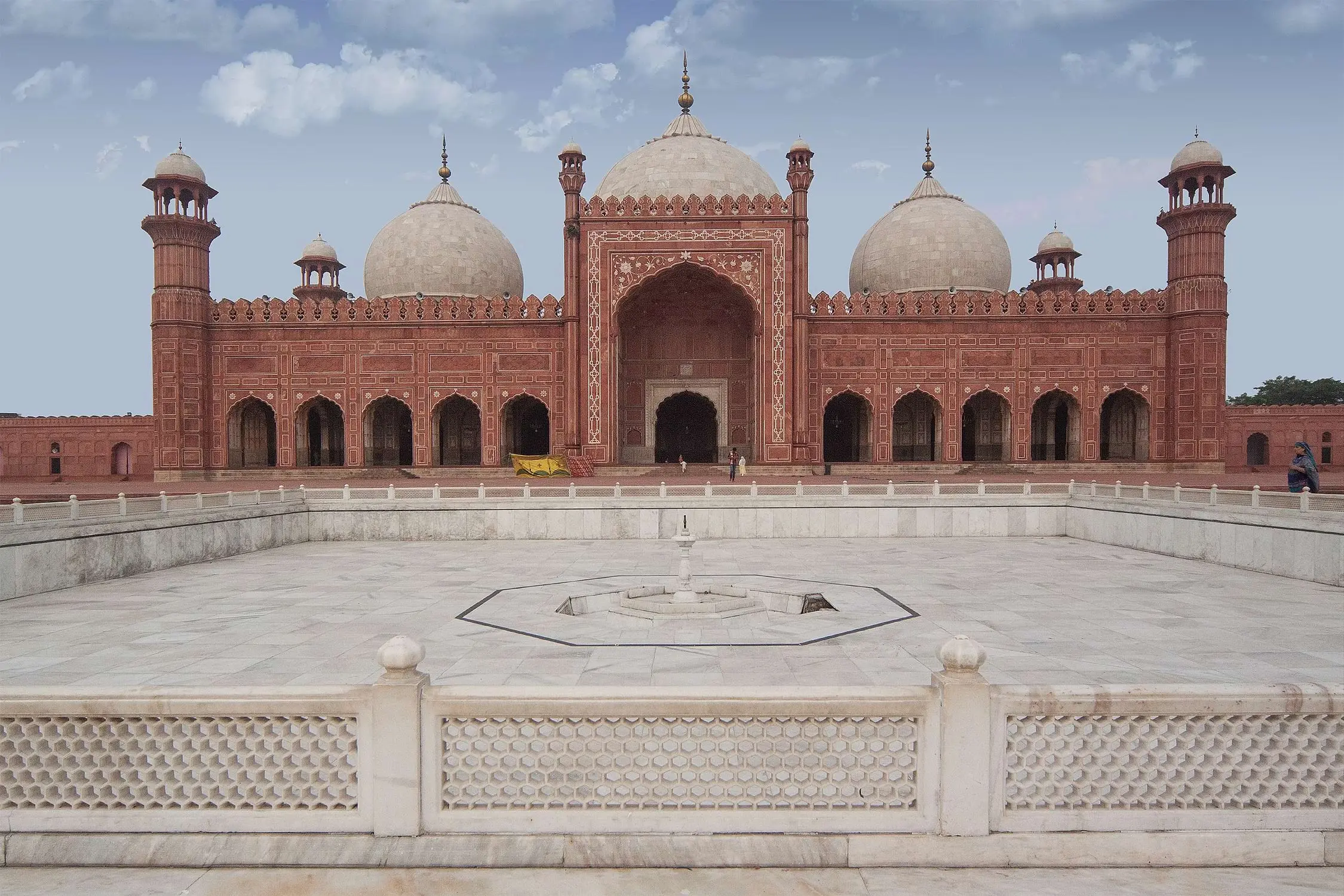
This is when the city gained its character. Lahore Fort was massively expanded. Jahangir, who loved the city enough to be buried there, added to it further. His son Shah Jahan built the Shalimar Gardens, and Shah Jahan's son Aurangzeb completed the Badshahi Mosque and the Alamgiri Gate, both still among the most recognisable landmarks in Pakistan. Lahore's reputation for beauty was strong enough that the English poet John Milton referenced the city in his writing in 1670, without ever having visited it himself.
Chaos, conquest and the Sikh Empire
Empires do not last forever, and Mughal control over Lahore began crumbling through the 1700s. The Afghan ruler Ahmad Shah Durrani took the city repeatedly, the Marathas briefly held it in 1758, and for a stretch Lahore was fought over by whichever army was strongest that year, reportedly cycling through nine different governors in just eleven years during the 1740s and 1750s.
Out of that instability rose Ranjit Singh, who captured Lahore in 1799 and was crowned Maharaja there in 1801, unifying various Sikh factions into one empire with Lahore as its capital. For the next four decades, the city was the seat of Sikh power in Punjab, until Ranjit Singh's death in 1839 triggered a succession crisis that the British were quick to take advantage of.
The British era and the shaping of modern Lahore
British troops entered Lahore in 1846 and formally annexed Punjab after a second war with the Sikhs in 1849. Whatever one thinks of colonial rule, it undeniably reshaped the city physically. The Government College, the High Court and the General Post Office all date from this period, blending Mughal, Gothic and Victorian architectural styles in a way that remains distinctive today.
One name worth knowing here is Sir Ganga Ram, often called the father of modern Lahore. He designed and built a large share of the city's institutional buildings, including the GPO, Lahore Museum, Aitchison College and Ganga Ram Hospital, leaving a mark on the city that is arguably as lasting as any Mughal emperor's.
Lahore's role in the birth of Pakistan
This is where Lahore stops being just an old city and becomes central to a nation's identity. In 1940, the All India Muslim League held its most consequential session in Lahore, where Muhammad Ali Jinnah first publicly laid out the demand for a separate Muslim homeland. The resolution passed there is the reason Minar-e-Pakistan exists today. Lahore's central jail also held independence-era prisoners, including Bhagat Singh, whose execution there remains a significant moment in the subcontinent's shared history.
Lahore since 1947: a city in three parts
Independence in 1947 brought both celebration and real tragedy, as communal riots damaged parts of the city before things stabilised. For a while, Karachi overtook Lahore as Pakistan's main economic centre, but Lahore regained much of its cultural and economic weight from the 1990s onward.
Today, people who know the city often describe it as three Lahores layered on top of each other: the old Walled City around the historic gates, still the densest and most atmospheric part of town; the colonial-era city stretching toward the canal; and the newer Lahore of areas like Gulberg, DHA, Bahria Town and Johar Town, built largely after independence. The Walled City has also been the focus of a major conservation effort since 2009, supported by the Punjab government and the World Bank.
Lahore's history at a glance
| Era | Approx. period | What defined it |
|---|---|---|
| Ancient and Hindu period | Before 10th century | Legendary founding, early regional rule, few surviving structures |
| Ghaznavid era | 975–1186 | Capture by Mahmud of Ghazni, rebuilding under Malik Ayaz |
| Delhi Sultanate and Mongol raids | 1206–1398 | Repeated Mongol destruction, near total loss of old architecture |
| Mughal era | 1524–1752 | Lahore Fort, Badshahi Mosque, Shalimar Gardens |
| Sikh Empire | 1799–1849 | Capital under Maharaja Ranjit Singh |
| British Raj | 1849–1947 | Colonial institutions, Ganga Ram's building projects |
| Independence era | 1947–present | Pakistan Movement, growth into a modern three-part city |
Frequently asked questions
Is Lahore older than Islamabad?
Yes, significantly. Islamabad was purpose-built as Pakistan's capital starting in the 1960s, while Lahore's recorded history stretches back well over a thousand years, with legendary origins claimed to go back even further.
Why does Lahore have so few buildings from before the Mughal era?
Mainly because of repeated Mongol invasions in the 13th and 14th centuries, combined with the fact that earlier rulers in this region rarely built in durable stone.
Who built the Badshahi Mosque?
The Mughal emperor Aurangzeb, who completed it around 1673 next to the Alamgiri Gate of Lahore Fort.
Was Lahore ever the capital of an empire?
Yes, more than once. It served as a Ghaznavid capital, a Mughal capital under Akbar and Jahangir, and the capital of Ranjit Singh's Sikh Empire.
What is the Walled City of Lahore?
It is the oldest surviving core of the city, known locally as the Inner City, home to much of Lahore's pre-colonial architecture and currently the focus of an ongoing conservation project.
Lahore's story is really a story of destruction and rebuilding, repeated again and again across a thousand years. Few cities in the region have been razed as many times and still managed to come back as a cultural capital. If you walk through the Walled City today, you are walking through the remains of that entire history, layer by layer.