
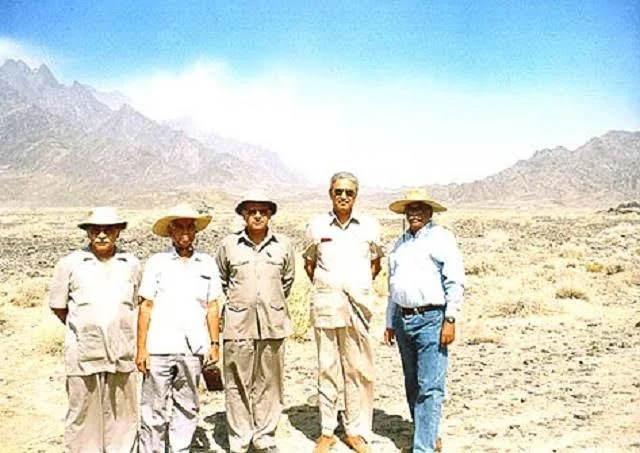
On 28 May 1998, in the Ras Koh Hills of Balochistan, Pakistan announced five underground nuclear tests. Two days later, it announced a sixth. In less than three weeks, South Asia had gone from a region where two rivals kept their nuclear capabilities largely undeclared to one where both had demonstrated them in public. The tests did not begin Pakistan's nuclear story. They ended its first, secret chapter.
That story goes back much further: to a civilian energy programme launched in the 1950s, to the loss of East Pakistan in 1971, to a secret meeting in Multan in 1972, to India's first nuclear test in 1974, and to two decades in which science, sanctions, war in Afghanistan and great-power politics pulled in opposite directions. Pakistani scientists and institutions mattered enormously — but no single person, and no single explanation, is enough.
A peaceful beginning: science, energy and Atoms for Peace
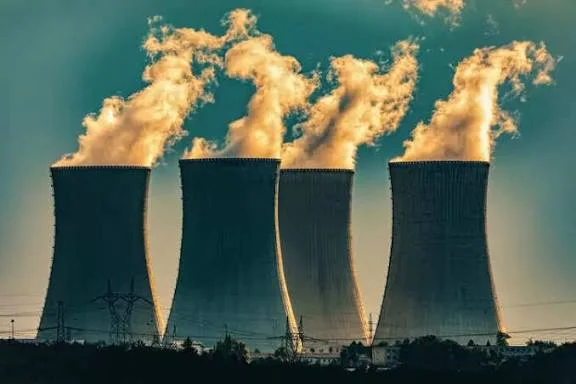
Pakistan in 1947 was a new state with limited industry, few research institutions and a pressing need for electricity and trained engineers. Nuclear technology first entered that picture not as a weapon, but as part of a post-war promise that atomic energy could serve development.
Under President Dwight D. Eisenhower's Atoms for Peace programme, Washington offered selected countries civilian nuclear research, training and equipment under safeguards intended to keep the work peaceful. Pakistan became an early participant. The Pakistan Atomic Energy Commission (PAEC) was created in 1956 to lead the programme, with Nazir Ahmad as its first chairman.
The early milestones were modest and civilian. The United States supplied a small research reactor, PARR-1, which reached criticality at the Pakistan Institute of Nuclear Science and Technology (PINSTECH) at Nilore, near Islamabad, in 1965. PINSTECH, founded under PAEC chairman Ishrat Usmani, trained a generation of physicists and engineers, many of whom studied abroad.
Pakistan's first commercial-scale station followed a different route. Canada supplied a 137-megawatt CANDU heavy-water reactor for the Karachi Nuclear Power Plant (KANUPP), which became critical in 1971 and entered commercial operation in 1972. KANUPP proved Pakistan could operate a nuclear power facility — and taught a lesson in dependence: when non-proliferation rules changed, outside fuel, spare parts and help could be withdrawn. Canada ended assistance to KANUPP in 1976, after India's 1974 test.
That distinction — between a reactor that makes electricity and a programme that makes fissile material for a weapon — is central to this history. A civilian reactor and a trained workforce do not automatically produce a bomb, but they create the knowledge and institutions from which a weapons programme can later be built, if leaders decide to take that step. In Pakistan's case, that decision was shaped less by the laboratory than by war.
1965, 1971 and the search for an equaliser
Pakistan and India fought wars in 1947–48, 1965 and 1971, and remained locked in dispute over Kashmir. The two later wars carried reinforcing lessons.
The 1965 war ended without a decisive result, but left Pakistan acutely aware of India's larger population, economy and armed forces. In this period Zulfikar Ali Bhutto, then foreign minister, argued publicly that Pakistan could not rely on conventional strength alone if India acquired nuclear weapons. His most famous formulation — that Pakistanis would "eat grass or leaves, even go hungry, but we will get one of our own" — is widely quoted, including in the Nuclear Museum's history. The exact wording varies between accounts, so it is best treated as a widely attributed statement of intent rather than a verbatim transcript. The political point is not in doubt: for Bhutto, a nuclear capability was about closing a gap conventional weapons could not close.
The 1971 war made that argument far more urgent. East Pakistan, separated from West Pakistan by more than a thousand miles of Indian territory, broke away after a political crisis and civil war. India intervened in support of secession, and Pakistani forces in the east surrendered at Dhaka on 16 December 1971. East Pakistan became Bangladesh. Pakistan lost more than half its population and a large part of its territory, and, in its leaders' eyes, any remaining illusion that geography, alliances or conventional arms could guarantee its survival.
Historians disagree about how directly 1971 "caused" the weapons programme: Bhutto had already been interested in nuclear options, and India's nuclear work was already a concern. The safest reading is that 1971 did not invent the idea, but transformed it from a long-term option into an urgent political project.
The Multan meeting: Bhutto and the decision of January 1972
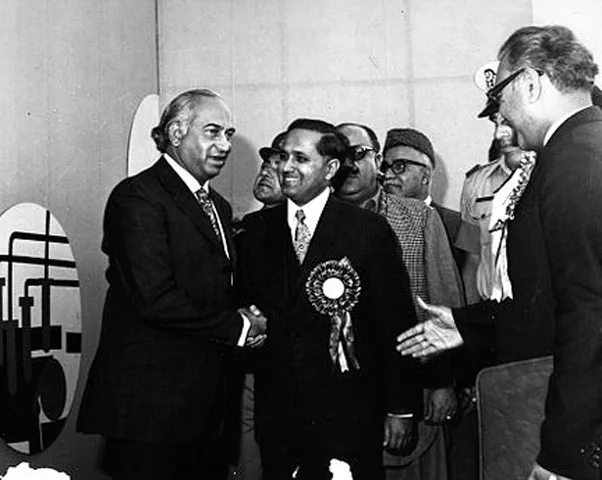
Bhutto became president in December 1971. On 20 January 1972, he met senior scientists and engineers at Multan, in Punjab, and authorised a crash effort to develop a nuclear explosive capability. The meeting is the conventional starting point for the weapons programme: the moment when political authority, funding and institutional responsibility were brought together behind a single, secret objective.
At Multan, Bhutto appointed Munir Ahmad Khan as chairman of PAEC. Trained in the United States and formerly head of reactor engineering at the IAEA in Vienna, he understood both reactor physics and the international nuclear system. Under him, PAEC expanded PINSTECH, created a Theoretical Physics Group, and pursued both routes to fissile material: plutonium, separated from spent reactor fuel in a reprocessing plant, and uranium, enriched to raise the share of the fissile isotope uranium-235.
Bhutto's vision was political as much as technical: a capability to restore Pakistan's standing after 1971, deter India, and give Pakistan a voice where nuclear possession marked status. Accounts of Multan commonly report a target of a few years, not decades. That timetable proved unrealistic, but it set the tone — secrecy, urgency and direct political control — for the next quarter-century. Multan itself produced no bomb, tested design or fissile stockpile; it launched an effort whose progress would depend on procurement, engineering and money, despite growing international controls.
Smiling Buddha: India's 1974 test changes the calculation
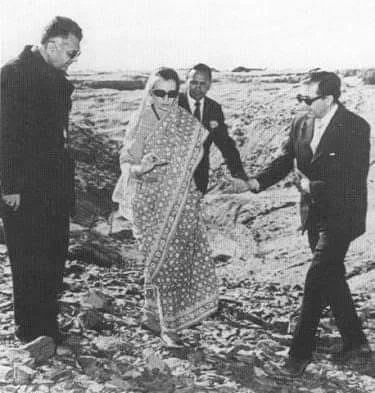
On 18 May 1974, India detonated a nuclear device at Pokhran in Rajasthan. New Delhi described it as a "peaceful nuclear explosion", for purposes such as mining, and insisted it had no weapons programme. The rest of the world largely read it differently: whatever its stated purpose, the test demonstrated that India could design and detonate a nuclear explosive. Its plutonium came from a research reactor supplied by Canada with American help, which made the test a scandal in Ottawa and Washington as well as a shock in Islamabad.
For Pakistan, 1974 was both vindication and setback. It vindicated Bhutto's warning that India would cross the nuclear threshold, but made Pakistan's task harder. Canada cut off nuclear cooperation with India and, in 1976, with Pakistan as well. France, which had agreed to supply a reprocessing plant at Chashma, came under intense American pressure and never completed it. In 1975, major suppliers began coordinating export controls, leading to the Nuclear Suppliers Group (NSG), which tied nuclear exports to safeguards on all of a recipient's facilities.
Pakistan also responded diplomatically, proposing a nuclear-weapon-free zone in South Asia and seeking security guarantees from the major powers. India did not accept: its security concerns extended to China, and it would not freeze its options while China remained nuclear-armed. Pakistan sought a regional bargain; India sought a global bargain against what it saw as discrimination. Neither got what it wanted, and both kept their options open.
Inside Pakistan, 1974 accelerated the weapons effort and shifted its emphasis. If plutonium via a French reprocessing plant was now politically blocked, uranium enrichment — pursued with smaller, more concealable equipment bought piece by piece from European suppliers — looked more promising. That shift set the stage for the programme's most famous, and most controversial, figure.
A. Q. Khan, Kahuta and the two institutions
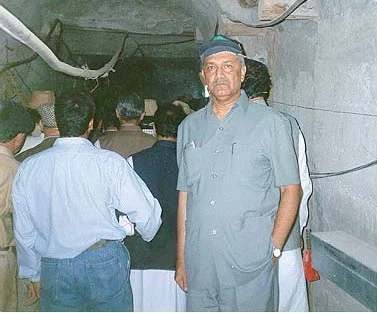
Abdul Qadeer Khan was a metallurgist. Educated in Pakistan and Europe, he worked in the Netherlands in the early 1970s for a company associated with URENCO, the European uranium-enrichment consortium, where he gained detailed knowledge of gas-centrifuge technology: machines that spin uranium gas at very high speed to separate its isotopes and, step by step, produce highly enriched uranium (HEU) suitable for a weapon.
In September 1974, after India's test, Khan wrote to Bhutto offering his services. He returned to Pakistan in late 1975 and, after an initial period working under PAEC, was given autonomous control of the enrichment project in July 1976. The new organisation, first called the Engineering Research Laboratories (ERL) and later renamed Khan Research Laboratories (KRL) in his honour, was based at Kahuta, near Islamabad. Its task was to build an enrichment plant.
The division of labour that followed is essential, and it defeats the myth that one man built the bomb alone. PAEC, under Munir Ahmad Khan and later Ishfaq Ahmad, retained responsibility for the overall weapons programme, reactor and plutonium-related work, theoretical physics and design, and eventually assembling and testing devices. KRL, under A. Q. Khan, was responsible for uranium enrichment at Kahuta. The two organisations competed and sometimes quarrelled — a rivalry that later coloured competing claims to credit — but both were necessary. Without HEU from Kahuta, there would have been no uranium device to test in 1998; without PAEC's design and test teams, there would have been no device to put that material into.
The wider infrastructure mattered just as much: uranium mining and milling, precision engineering, materials, electronics, military engineers to build secure facilities and test sites, and a procurement network that bought dual-use components despite export controls, often through front companies. That network would later become Pakistan's gravest international scandal.
The project is often referred to by the codename Project-706, used for the uranium-enrichment effort and, more loosely, for the early weapons programme. Exact boundaries and dates in a classified programme are difficult to establish from open sources. What is clear is that by the late 1970s, Pakistan had two parallel tracks — plutonium under PAEC and uranium under KRL — and a political commitment to keep both alive.
The proliferation network: what is established, what is alleged
No honest history of Pakistan's nuclear programme can omit the A. Q. Khan network, and no honest history can treat every allegation about it as proven fact.
What is established is this. In February 2004, after IAEA and Western investigations and Libya's disclosure of its own programme, A. Q. Khan appeared on Pakistani television and confessed to transferring nuclear technology to other countries. He was removed from his official position and pardoned the same day by President Pervez Musharraf. The Pakistani government said Khan had acted without state authorisation. Khan later gave conflicting accounts, at times suggesting senior officials knew of, or authorised, at least some transfers.
IAEA investigations and later research found that the network supplied centrifuge designs, components and technical advice to Iran from the late 1980s, to Libya in the late 1990s, and to North Korea in the late 1990s and early 2000s. Libya received, among other things, a weapon design found on intermediaries' computers. Iran received early centrifuge designs that shaped its enrichment programme. North Korea received centrifuges and designs while Pakistan was also receiving North Korean ballistic-missile technology — often described as "missiles for centrifuges", although the precise terms of any exchange remain disputed.
What remains contested is the degree of state involvement. The Carnegie Endowment's assessment draws a careful distinction: some transfers, particularly to North Korea, appear to have had at least some higher-level support, while others, including most transfers to Iran and the Libyan deal, do not appear to have been sanctioned by the Pakistani government as a whole. Other analysts argue for a wider official role; the government has consistently denied authorising proliferation. Because key documents remain classified and Khan's statements changed over time, the full picture cannot be settled from open sources alone. The responsible conclusion is that a network centred on Khan did transfer sensitive technology, that secrecy gave it a degree of protection, and that the line between private enterprise, institutional complicity and state policy remains debated — not a slogan.
The network's exposure damaged Pakistan's standing in one respect more than the 1998 tests: it turned a story about deterrence against India into a story about global proliferation risk. After 2004, Pakistan tightened export controls, including the 2004 Export Control Act and a Strategic Export Control Division. Those reforms did not erase the earlier record.
Zia, Afghanistan and the American dilemma
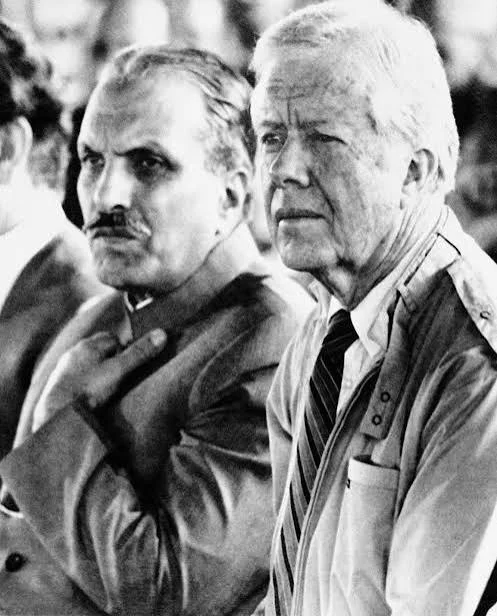
Bhutto was overthrown in a military coup on 5 July 1977 by General Muhammad Zia-ul-Haq, who later had Bhutto executed in 1979. The coup did not stop the programme; it changed its management to tighter military oversight, with an inter-ministerial committee coordinating PAEC and KRL under the president.
Then, in December 1979, the Soviet Union invaded Afghanistan. Pakistan suddenly became indispensable to the United States as the conduit for aid to the Afghan resistance. Washington faced a dilemma it never fully resolved: it wanted to stop Pakistan's nuclear programme, but it needed Pakistan's cooperation against Moscow more.
The result was a compromise. In 1979, President Jimmy Carter had cut off American aid under the Symington Amendment after finding Pakistan was building a clandestine enrichment plant at Kahuta. After the Soviet invasion, Carter offered a smaller package, which Zia dismissed as "peanuts". Under President Ronald Reagan, Congress agreed in 1981 to a $3.2 billion package over six years, with a six-year Symington waiver, and Pakistan bought F-16s. Washington had not stopped worrying — officials pressed Islamabad in private, including over enrichment levels — but for most of the 1980s the Afghan war took precedence over non-proliferation in practice, even if not in law.
It would therefore be wrong to say the United States "ignored" the programme in the 1980s, or "fully supported" it. The record shows sustained concern, warnings and legislative pressure alongside a decision not to break a partnership judged essential against the Soviet Union. Pakistan learned a lasting lesson: American support could be generous when Pakistan was strategically useful, and conditional when it was not.
Sanctions, China and the non-proliferation order
Three pieces of American legislation shaped Pakistan's nuclear diplomacy, and they are often confused. The Symington Amendment (1976) barred most American assistance to a country trafficking in enrichment equipment or technology outside international safeguards; it was invoked against Pakistan in 1979, then waived for the Afghan war. The Glenn Amendment (1977) barred assistance to a non-nuclear-weapon state, as defined by the Nuclear Non-Proliferation Treaty (NPT), that detonated a nuclear explosive device; it would be invoked in 1998. The Pressler Amendment (1985), specific to Pakistan, barred most economic and military assistance unless the American president certified each year that Pakistan did not possess a nuclear explosive device.
That certification became impossible after the Soviet withdrawal from Afghanistan, when Pakistan's strategic value to Washington fell sharply. In October 1990, President George H. W. Bush declined to certify, triggering Pressler sanctions. Military aid stopped and delivery of F-16 aircraft Pakistan had already paid for was blocked — a grievance that still colours Pakistani views of American reliability. In 1995, the Brown Amendment eased the economic side of Pressler, but the military cutoff remained.
Pakistan's relationship with China developed in parallel. The two countries signed a comprehensive nuclear cooperation agreement in 1986, and China built the Chashma power reactors, the first entering operation in 2000 under IAEA safeguards for that facility. American intelligence assessments also reported extensive Chinese support for Pakistan's weapons-related work in earlier decades, and continued contacts even after Beijing pledged in May 1996 not to assist unsafeguarded facilities. These are distinct claims and should not be merged: safeguarded reactors at Chashma are not, by themselves, proof of a weapons transfer, and later safeguarded projects do not disprove earlier reported weapons-related help.
Pakistan has never signed the NPT, arguing that the treaty, extended indefinitely in 1995, would freeze it as a non-nuclear-weapon state while recognising five established nuclear powers and leaving India unaddressed. Pakistan says it would consider arrangements only as part of a regional settlement constraining India. Critics reply that this allowed a capability outside the treaty's inspection system, and that regional conditions cannot justify the Khan network's exports.
A capability before a test: the 1980s and 1990s
By the mid-1980s, most analysts agree, Pakistan had moved from research to something closer to a usable capability — but the exact date is disputed, and the dispute matters.
PAEC carried out its first "cold test" at Kirana Hills, near Sargodha, on 11 March 1983. A cold test checks the non-nuclear parts of a device — explosives, triggering and diagnostics — without a fissile core, so it produces no nuclear explosion. Pakistan carried out more than twenty such tests between 1983 and 1990, showing PAEC could build and diagnose a design, even if they did not prove a deliverable weapon.
A. Q. Khan later claimed Pakistan could have detonated a device at a week's notice by 1984. American intelligence assessments in the mid-1980s similarly concluded Pakistan was enriching uranium to high levels and developing explosion mechanisms. In 1992, Foreign Minister Shahryar Khan said Pakistan had the components and know-how to make at least one device. These are retrospective and political statements, not laboratory records, and should be read as evidence of confidence and intent, not a precise technical audit.
The distinction matters. There is a difference between having research and infrastructure, producing fissile material, building a device that could in principle be tested, having a weapon deliverable by aircraft or missile, and publicly demonstrating an explosion. Pakistan appears to have crossed the first three thresholds at different points in the 1980s, and developed delivery systems — including the Ghauri ballistic missile, derived from North Korean technology — during the 1990s. It did not cross the last threshold until 1998. That gap, between a widely suspected capability and a demonstrated one, made the 1990s a decade of ambiguity: Pakistan neither confirmed nor denied possession, while Pressler forced Washington to act as if the question had an answer.
Pokhran-II: India tests again
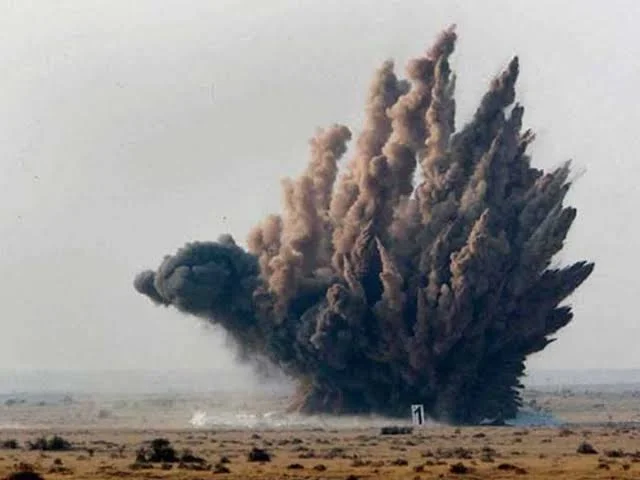
On 11 May 1998, India conducted three nuclear tests at Pokhran, followed by two more on 13 May. The government of Prime Minister Atal Bihari Vajpayee, elected earlier that year at the head of a Bharatiya Janata Party-led coalition, declared India a nuclear-weapon state. It was the first Indian test since 1974, ending a 24-year moratorium.
India's stated reasons combined security and status. In a letter to President Bill Clinton, Vajpayee cited a deteriorating security environment, an overt nuclear-armed China on India's border — a state that had fought a war with India in 1962 — and a covert nuclear-armed Pakistan, which India said China had helped. Domestic politics also mattered: the new government had long promised to end India's nuclear ambiguity. The international reaction was swift condemnation and, from the United States, Glenn Amendment sanctions imposed on 13 May.
For Pakistan, Pokhran-II changed the calculation overnight. A capability kept ambiguous for a decade was now, in Islamabad's view, strategically insufficient: a private capability would not deter Indian coercion or reassure Pakistan's public and military that the balance had been restored. The question was no longer whether Pakistan could test, but whether it would — and at what price.
Chagai: the decision, the tests and the count
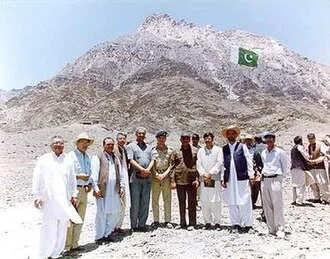
Prime Minister Nawaz Sharif's government spent seventeen days weighing that price. Washington, London, Tokyo and other capitals urged restraint, warned of sanctions, and offered incentives, including, according to contemporary reporting, American offers to ease Pressler restrictions and provide military and economic help if Pakistan refrained. Inside Pakistan, the scientific leadership, led by PAEC's Samar Mubarakmand and A. Q. Khan, assured the government the devices were ready, and the military leadership supported testing.
On 28 May 1998, at 3:15 p.m. Pakistan time, Pakistan detonated five devices simultaneously in tunnels in the Ras Koh Hills, Chagai district, Balochistan. The series was codenamed Chagai-I. Sharif announced that evening that Pakistan had "settled the score". On 30 May, Pakistan detonated a sixth device at a separate site in the Kharan Desert, codenamed Chagai-II.
That is the official count: six devices in two test events — Chagai-I was one event with five devices fired together; Chagai-II was a second event with one device. Yield figures are disputed: Pakistan claimed around 40 kilotons for 28 May, while independent seismic estimates put Chagai-I at roughly 6 to 20 kilotons, with a smaller yield for Chagai-II. Pakistan's Theoretical Physics Group put the 30 May device at around 20 kilotons. The discrepancy does not change the political fact — Pakistan had demonstrated nuclear explosions — but yields should be reported as claimed versus independently estimated, not as a single settled number.
The tests were carried out by PAEC teams under Mubarakmand, with KRL's enriched uranium for Chagai-I and, according to most accounts, a plutonium-based design for Chagai-II. Design details remain classified and are not speculated on here beyond that distinction.
International reaction was immediate. The UN Security Council adopted Resolution 1172 unanimously on 6 June 1998, condemning the Indian and Pakistani tests, demanding no further tests, and urging both countries to stop weapons development and join the NPT and CTBT without conditions. The United States imposed Glenn Amendment sanctions on Pakistan on 30 May, including curbs on assistance, military sales, credits and support for international financial institution loans. Japan and others imposed their own sanctions.
Domestically, the reaction was very different. Crowds celebrated, the government declared 28 May Youm-e-Takbeer — the Day of Greatness — and the day has been commemorated annually since, including, in recent years, as a public holiday. For many Pakistanis, Chagai was the restoration of a balance tilted since 1971; for many outside Pakistan, it was a dangerous escalation.
What changed after 1998?
The first change was doctrinal. In May 1999, Sharif described "nuclear restraint, stabilization and minimum credible deterrence" as the basic elements of policy. In Pakistani official usage, credible minimum deterrence meant a capability sufficient to deter aggression, especially from India, without an open-ended arms race — but officials stressed that "minimum" could not be fixed as a static number, and must be reassessed as India's capabilities changed. That flexibility helps explain why the arsenal has grown since 1998, and why later doctrine added "full-spectrum deterrence", including shorter-range systems such as the Nasr missile, tested in 2011, intended to deter limited conventional incursions.
The second change was institutional. In February 2000, Pakistan created the National Command Authority (NCA), chaired by the prime minister, with the Strategic Plans Division (SPD) as its secretariat and the services' Strategic Forces Commands responsible for delivery systems. The NCA was meant to centralise political control and improve safety and security, ending the era in which the programme was run largely through personal networks and ad hoc committees. Whether it is sufficient remains debated, especially after the Khan network's exposure.
The third change was diplomatic, and contradictory. In February 1999, Sharif and Vajpayee signed the Lahore Declaration, recognising that the nuclear dimension added to their responsibility to avoid conflict, and committing to confidence-building measures, advance notification of missile tests, and steps to reduce the risk of accidental or unauthorised use. Within months, the Kargil conflict showed how limited that commitment was: the two nuclear-armed states fought a limited war that stopped short of full-scale conflict only after intense international pressure. Lahore did not prevent Kargil, and Kargil did not destroy Lahore's logic. Together they illustrate the central paradox of nuclear South Asia.
That paradox is the heart of the deterrence debate. Supporters note that India and Pakistan have not fought a full-scale war since 1971, and that severe crises since 1998 have stopped short of general war, in part because both sides understood the nuclear risk. Critics reply that nuclear weapons have not prevented limited wars or crises below the nuclear threshold, and have created new risks of miscalculation, accident and insider threat. The evidence supports a middle position: they appear to have raised the cost of full-scale war, without eliminating conflict or making escalation impossible.
The economic costs were real, even if shorter-lived than many predicted. Sanctions in 1998–99 squeezed reserves and access to international lending. Many were eased after September 2001, when Pakistan again became a key American partner — driven, as in the 1980s, by strategic utility rather than a resolution of the nuclear issue. Pakistan remains outside the NPT and the NSG as a member, treated as an exception, not a norm.
The wider significance: what the history actually shows
Was the programme driven primarily by India, by 1971, or by a combination? The evidence points to a combination. India's conventional superiority and its 1974 test provided the external threat; the loss of East Pakistan provided the trauma and the sense that conventional deterrence had failed. Bhutto's ambition, Zia's military management, American choices in Afghanistan and Chinese assistance provided the means and permissive conditions. Remove any one element and the timing or scale changes; remove the India factor and the weapons programme is difficult to explain at all.
How important were Pakistani scientists compared with foreign technology? Both were indispensable. PAEC and KRL built institutions, trained people, solved engineering problems and eventually designed, assembled and tested devices. They did so with knowledge, components and, in the early stages, designs and materials from abroad — American and Canadian civilian cooperation, European suppliers, URENCO-derived centrifuge knowledge, and, according to American assessments, Chinese assistance. To call the programme purely indigenous ignores that record; to call it purely imported ignores the decades of Pakistani work that turned imported pieces into a working capability. Procurement alone, without a scientific establishment, does not produce a bomb.
What did it cost? Exact spending figures remain classified, but the programme absorbed scarce resources over decades. Diplomatically it brought sanctions, isolation from the non-proliferation mainstream, and, after 2004, the stigma of the Khan network. In security terms it bought a deterrent Pakistani leaders believe has prevented a major Indian attack, at the price of permanent nuclear-crisis risk and the burden of securing weapons and materials.
Did the 1998 tests change the India–Pakistan relationship? Yes, but not simply. They made the nuclear balance overt, clarifying deterrence but also making every subsequent crisis a nuclear crisis in the world's eyes. They forced both countries to build command-and-control systems and talk, however imperfectly, about risk reduction. And they left Kashmir and other underlying disputes unresolved. Nuclear weapons changed how India and Pakistan fight and negotiate; they did not resolve why they fight.
For the wider world, three lessons stand out. First, non-proliferation rules work best when seen as fair: a system that appears to punish one country for what another is allowed to do will be resisted, even at high cost. Second, strategic partnerships can undermine non-proliferation when short-term utility outweighs long-term rules — a lesson the United States confronted twice in Afghanistan. Third, secrecy is double-edged: it protected the programme from outside pressure, but also created space for a proliferation network.
Pakistan became a nuclear power not in a single moment at Chagai, but over forty years, through a civilian programme turned to military ends, a defeat turned into a political mission, a scientific establishment built from almost nothing, and international choices — by India, the United States, China and Pakistan itself — that made the bomb seem, to successive Pakistani leaders, both necessary and attainable. Chagai made that long history visible. It did not make it simple, and it did not end it.
Sources
- Pakistani Nuclear Program — National Museum of Nuclear Science & History (Atomic Heritage Foundation).
- Pakistan Nuclear Milestones, 1955–2009 — Wisconsin Project on Nuclear Arms Control.
- Pakistan's Nuclear Program — Centre for Pakistan and Gulf Studies.
- The Peaceful Explosion — Atomic Archive.
- Parsing the Hype: How Nuclear Materials and Technology Spread — Carnegie Endowment for International Peace.
- Confrontation and Retreat: The U.S. Congress and the South Asian Nuclear Tests — Key Legislation — Robert M. Hathaway, Arms Control Association, January 2000.
- Pakistan-U.S. Relations — Congressional Research Service report 94-041, via Global Security.
- Why does Pakistan observe Youm-e-Takbeer? — Geo News.
- Resolution 1172 (1998) — United Nations Digital Library record.
- Pakistan's Evolving Nuclear Doctrine — Sitara Noor, Arms Control Association, October 2023.